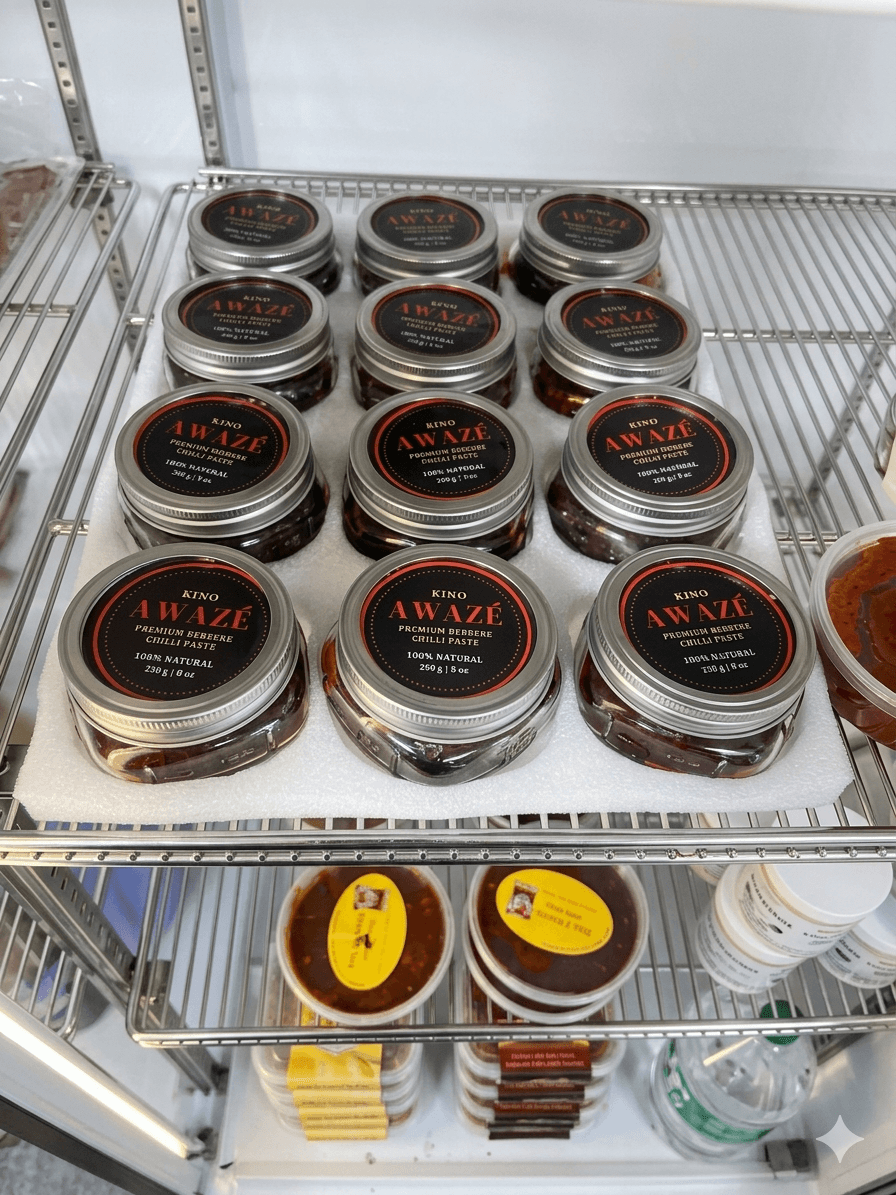
Premium Berbere Chili Paste

Kino
Awazé

An ancient Ethiopian spice tradition, hand-crafted for the modern table.

Discover the Story
Kino Awazé Berbere Chili Paste label
Our Story

The Legend of Awazé

For over five hundred years, awazé has graced the tables of Ethiopian royal courts and village feasts alike. Born in the highlands of the Ethiopian plateau, this fire-red paste was first recorded in the kitchens of Emperor Zara Yaqob in the 15th century — a condiment so prized it was presented as a gift to visiting dignitaries.

The word awazé carries profound meaning: in the old court tongue, it translates as "the voice that announces fire" — a fitting name for a paste that speaks before you taste it, its aroma filling the room with the warmth of ancient spice routes.

At its heart lies berbere — Ethiopia's sacred spice blend — married with aged chilies, bishop's weed (netch azmud), sacred basil (besobela), and tej, the traditional honey wine that carries the paste's heat into a lingering sweetness. Together they form a flavor unlike any other: bold, complex, ancient.

Awazé was not merely food — it was ceremony. It marked celebrations, sealed alliances, and honored guests. To offer awazé was to offer the finest your kitchen could give.
The Birth of Kino

Kino is Amharic for "the real one." It's a declaration, not a brand name — a promise that what you hold in your hands is the genuine article, unchanged by shortcuts or substitutions.

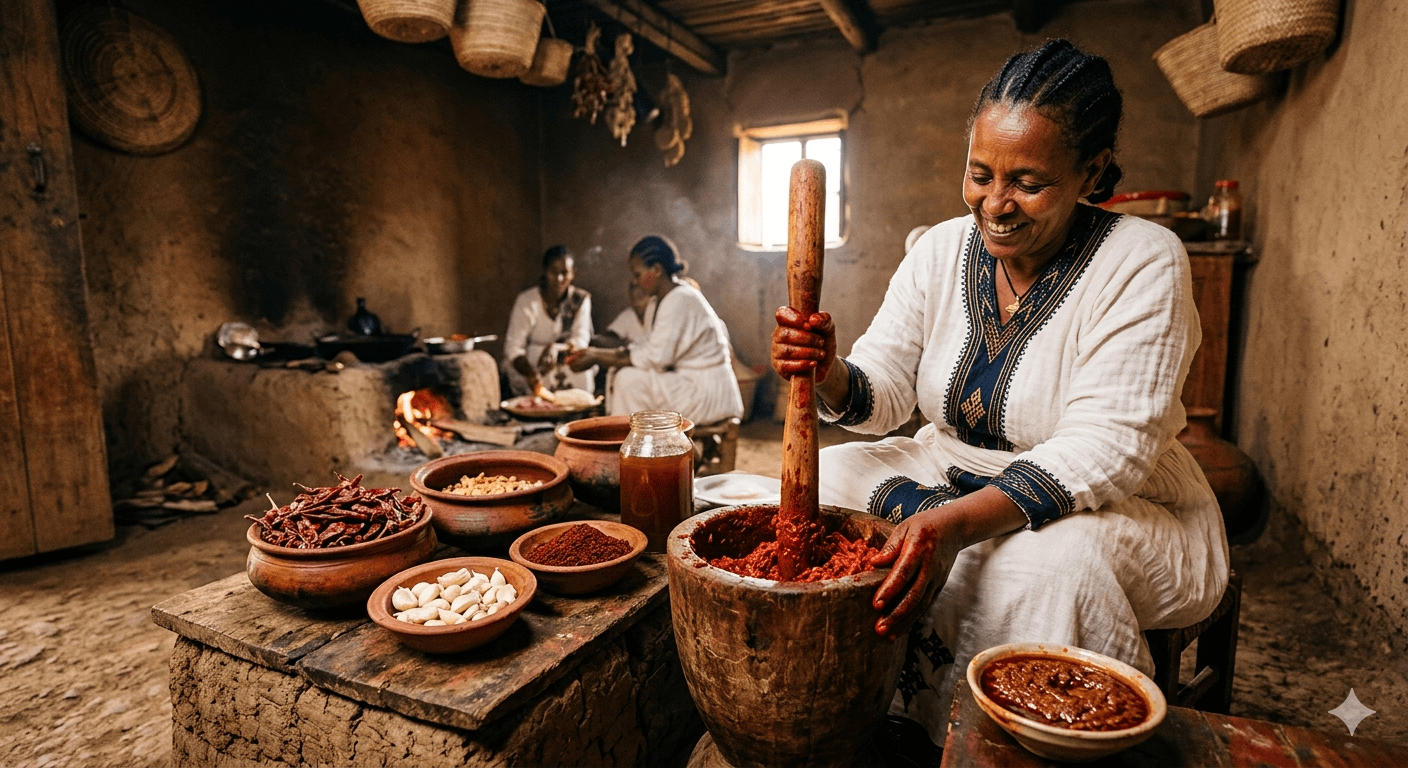
Our founder grew up watching her grandmother prepare awazé every weekend in Addis Ababa. The recipe traveled with the family across two continents — to London, then to North America — carried in handwritten notebooks and the memory of a kitchen that always smelled like home.

Years of adaptation, of watching friends and neighbors fall in love with that taste, led to a question: "Why isn't this available everywhere?"The answer became Kino Awazé.

Every jar is crafted using chilies and spices sourced directly from Gurage Zone cooperatives and the legendary Addis Ababa Merkato — the largest open-air market in Africa. No preservatives. No fillers. No shortcuts. Just the real one.

Nutritional Benefits

Ancient Wisdom. Modern Nutrition.

Every ingredient in Kino Awazé was chosen for flavor — and every ingredient delivers far more than flavor.

🌿

Anti-Inflammatory

Turmeric, ginger, and black cumin (nigella) work in concert to reduce inflammation — ancient remedies now backed by modern research.

🍊

Vitamin C Rich

Our sun-dried red chilies are loaded with vitamin C, delivering immune support and radiant skin health with every spoonful.

🫙

Antioxidant-Dense

Cloves, cinnamon, and fenugreek bring some of nature's highest antioxidant concentrations, fighting oxidative stress at the cellular level.

🔥

Metabolism Support

Capsaicin — the active compound in our chilies — activates thermogenesis, gently elevating your metabolic rate and promoting fat oxidation.

🌱

Gut Health

Bishop's weed (netch azmud) and sacred basil (besobela) have long been used in Ethiopian medicine to calm digestion and support a healthy microbiome.

Iron-Rich Blend

The berbere spice blend is a natural source of non-heme iron, supporting energy levels, oxygen transport, and overall vitality.

Recipes

Cook With Kino

Three ways to let the paste do the work. No expertise required — just great ingredients.

Awazé Salmon

2 servings·25 min + overnight marinade

Ingredients

  • 2 salmon fillets (6 oz each), skin-on
  • 3 tbsp Kino Awazé paste
  • 2 tbsp olive oil
  • 1 tbsp lemon juice
  • 2 cloves garlic, minced
  • 1 tsp honey
  • Salt to taste
  • Fresh cilantro and lemon wedges to serve

Method

  1. 1Mix Kino Awazé paste, olive oil, lemon juice, garlic, and honey in a bowl to form the marinade.
  2. 2Pat salmon dry, score the skin lightly. Coat fillets generously in marinade. Cover and refrigerate overnight (minimum 4 hours).
  3. 3Bring salmon to room temperature 20 minutes before cooking.
  4. 4Heat a heavy skillet over medium-high heat until smoking. Place salmon skin-side down. Press gently for 30 seconds.
  5. 5Cook skin-side down for 4–5 minutes until skin is crisp. Flip and cook 2 more minutes for medium doneness.
  6. 6Rest 2 minutes. Serve with fresh cilantro and lemon wedges.

Awazé Grilled Steak

2 servings·20 min + 2-hour marinade

Ingredients

  • 2 ribeye or flat-iron steaks (8 oz each)
  • 4 tbsp Kino Awazé paste
  • 2 tbsp unsalted butter
  • 1 tbsp neutral oil (avocado or canola)
  • 3 garlic cloves, smashed
  • 2 sprigs fresh rosemary
  • Flaky sea salt and black pepper

Method

  1. 1Rub steaks liberally with Kino Awazé paste. Season with salt and pepper. Marinate at room temperature for 2 hours or refrigerate up to 24 hours.
  2. 2Heat a cast-iron skillet over high heat for 3–4 minutes until ripping hot. Add oil.
  3. 3Sear steaks 3–4 minutes per side for medium-rare, basting frequently with butter, garlic, and rosemary.
  4. 4Use a meat thermometer: 130°F for medium-rare, 140°F for medium.
  5. 5Rest on a cutting board for 5 minutes — this is non-negotiable for juicy results.
  6. 6Slice against the grain. Finish with a final smear of Kino Awazé on top.

Awazé Roasted Veggies

4 servings·40 min

Ingredients

  • 1 small head cauliflower, cut into florets
  • 2 medium sweet potatoes, cubed (1-inch)
  • 1 large red onion, cut into wedges
  • 3 tbsp Kino Awazé paste
  • 3 tbsp olive oil
  • 1 tbsp apple cider vinegar
  • Salt and pepper to taste
  • Fresh parsley and tahini drizzle to serve

Method

  1. 1Preheat oven to 425°F (220°C). Line two baking sheets with parchment.
  2. 2Whisk together Kino Awazé paste, olive oil, and apple cider vinegar in a large bowl.
  3. 3Toss all vegetables in the sauce until thoroughly coated. Season with salt and pepper.
  4. 4Spread in a single layer across both baking sheets — do not crowd, or they'll steam instead of roast.
  5. 5Roast for 20 minutes, toss, then roast another 15–18 minutes until caramelized and tender.
  6. 6Serve on a platter. Drizzle with tahini and scatter fresh parsley over the top.
Reviews

What People Are Saying

From Addis Ababa to New York — the verdict is unanimous.

I've been chasing this flavor my whole life. My mother made awazé every Sunday, and when I first tasted Kino, I had to sit down. It's not just close — it's it. The besobela, the tej undertone, the heat that lingers in the right way. This is the real thing.

Mekdes T.

Ethiopian-American · Atlanta, GA

We went through three jars testing it in the kitchen before I was ready to put it on the menu. Every cook was asking where to get more. The depth of spice, the balance between heat and fermented complexity — this is a professional-grade ingredient. I use it on lamb, on duck, even in vinaigrettes.

James O.

Executive Chef · New York, NY

I bought it on a whim and now I genuinely panic when we're running low. The salmon recipe on the jar is dangerous — I've made it eleven times. My husband who 'doesn't like spicy food' requests it weekly. The heat is there but it's not aggressive, it's inviting.

Priya M.

Home Cook · Chicago, IL

I've reviewed condiments for fifteen years and Kino Awazé is in a category of its own. What strikes you immediately is the layered complexity — it's not a one-note hot sauce. There's floral warmth, earthy depth, and a finish that keeps evolving. The sourcing story is real, and you taste it.

David K.

Food Writer · Seattle, WA

Sending this to my family back in Addis was the highest compliment I could pay. My aunt — who makes the best awazé I've ever had — tasted it and said 'yetenabet new.' It means 'this is ours.' She asked for three jars to take back home.

Tigist H.

Addis Ababa native · Toronto, ON

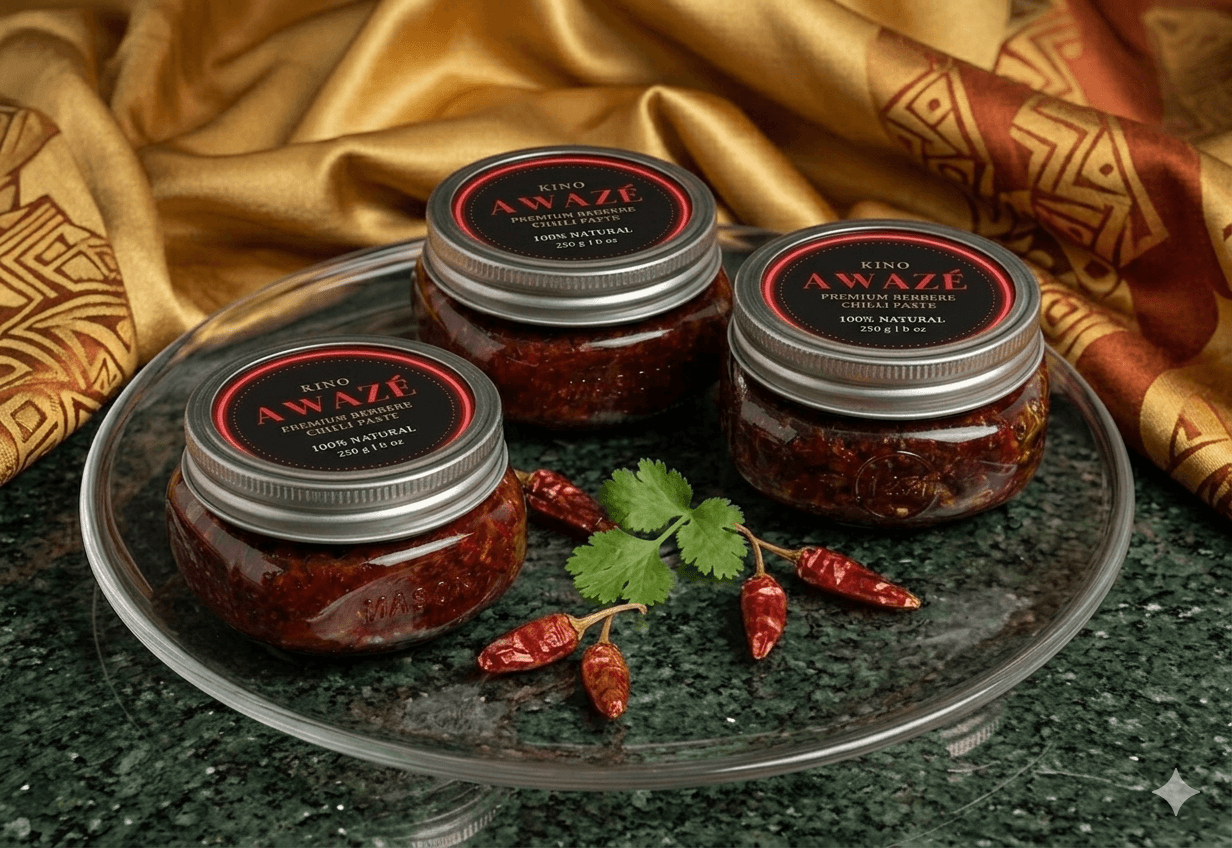
Kino Awazé bottles